
← Back: Sewing Machine Anatomy
The presser foot holds the fabric against the feed dogs.
Without sufficient pressure:
- the fabric feeds poorly,
- the stitch is uneven,
- the seam veers off course.
It works in coordination with:
- the feed dogs,
- the needle,
- the thread tension.
What does the presser foot actually do?
It exerts vertical pressure on the fabric.
This pressure allows:
- the feed dogs to move the fabric correctly,
- the stitch to form without shifting,
- the layers to be stabilized.
If the pressure is incorrect:
- the fabric slips,
- the jersey ripples,
- thick layers get stuck.
The different basic presser feet
The standard foot (universal foot)
This is the basic foot.
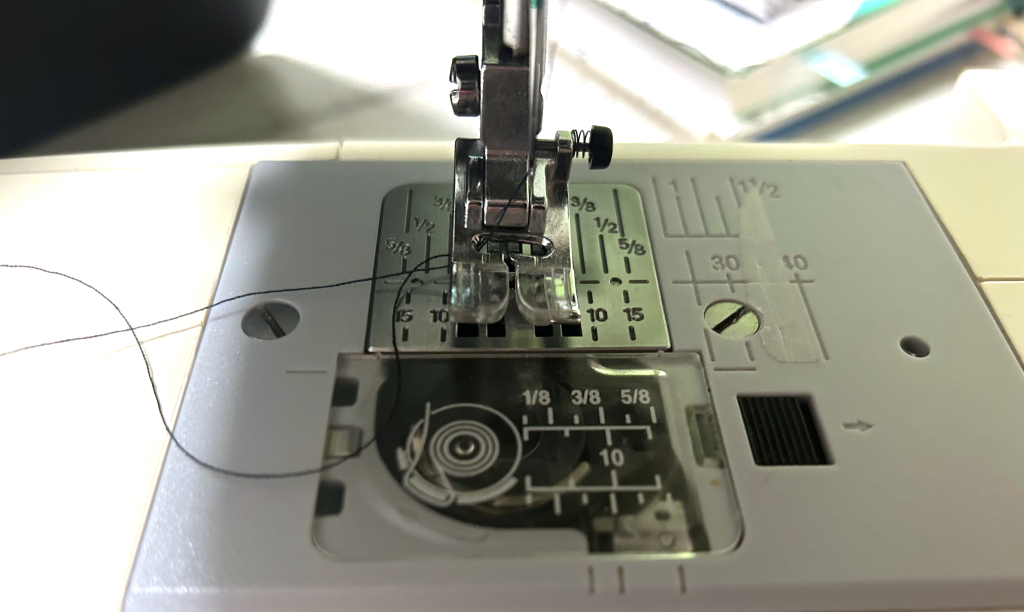
It allows for:
- straight stitching,
- zigzag stitching,
- any standard assembly.
It has a central opening that allows for lateral needle movement.
Usage: 90% of common sewing tasks.
The zipper foot
It is asymmetrical.
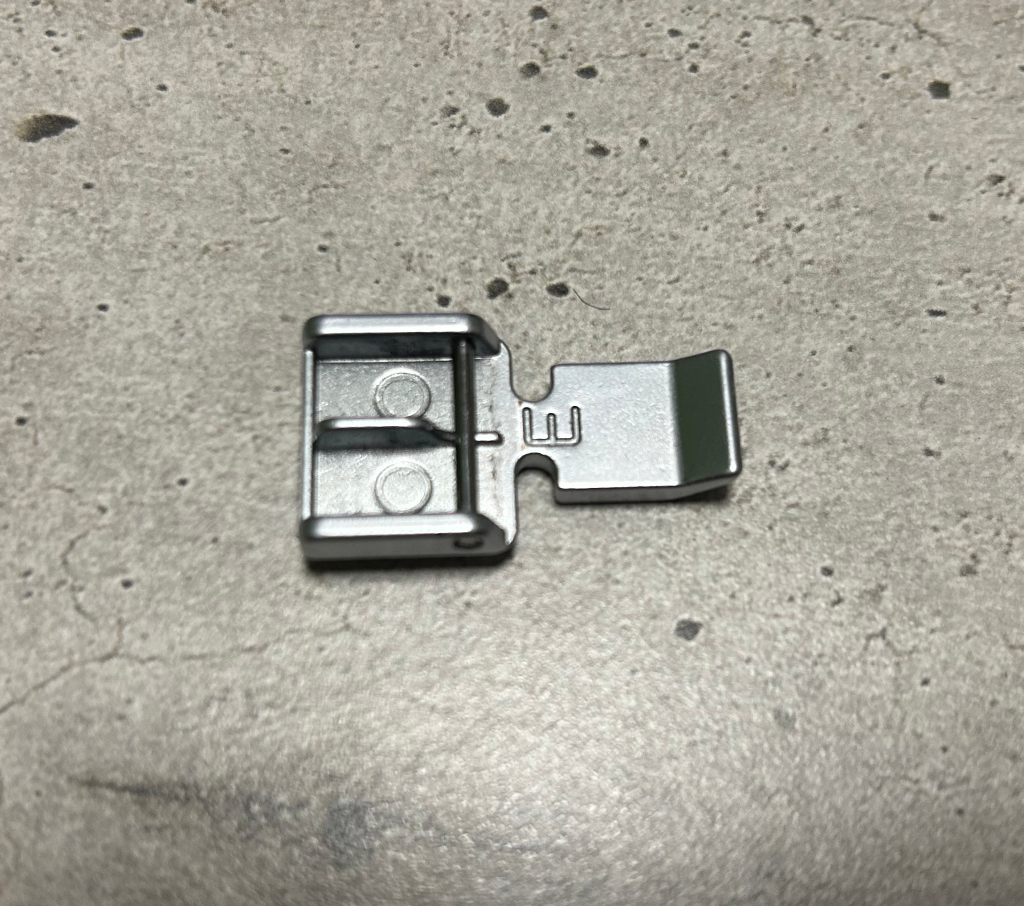
It allows you to:
- sew as close as possible to a zipper,
- sew along an edge,
- topstitch close to a thick layer.
It can often be attached:
- on the right,
- or on the left of the needle.
It offers more lateral precision.
The buttonhole foot
It automatically guides the length of the buttonhole.
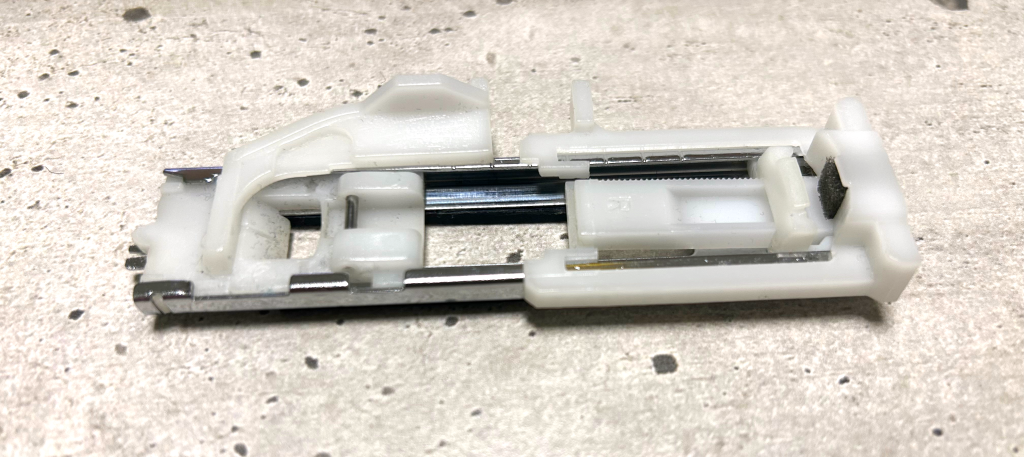
It can be:
- semi-automatic,
- automatic (with a button measurement system).
It ensures:
- consistency,
- repeatability,
- precision.
Important points
- Change the foot with the machine turned off.
- The foot influences precision.
- The foot does not adjust the tension.
- The foot affects fabric stability.
Common mistakes
- Forgetting to lower the foot → tangled thread underneath.
- Using the standard foot for everything.
- Not adapting the foot to the thickness of the fabric.
← Previous Lesson
The thread
Next Lesson →
Essential settings

